
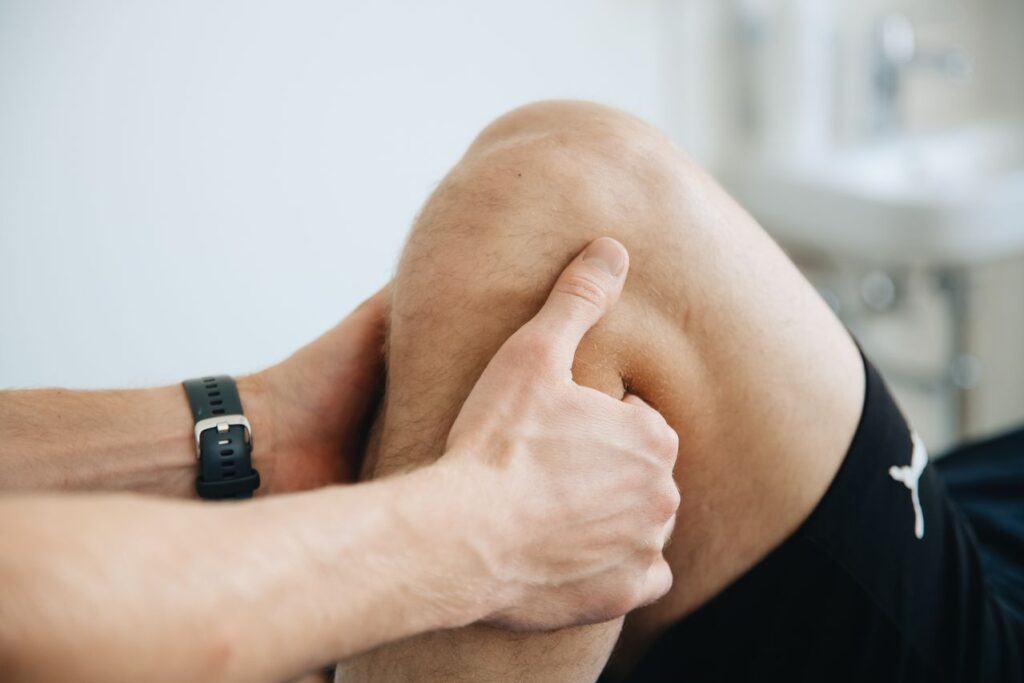
Knee pain, strain or injury does not always require the same type of support. A knee sleeve may be suitable for mild discomfort, while a more serious injury may require a brace that provides greater control over knee movement.
When can a knee sleeve provide sufficient support?
A compression knee sleve is flexible and does not significantly restrict joint mobility. Its primary function is to provide gentle compression and sensory feedback, which may help improve awareness of knee positioning during movement.
A compression knee sleve may be beneficial for:
- mild overuse during physical activity
- minor knee discomfort
- a feeling of swelling
- the need for additional comfort and support during exercise
However, it should not be considered protection against all types of injuries. If the knee feels unstable, is painful following an injury, or shows significant swelling, a compression sleeve alone may not provide sufficient support.
A knee brace offers more support than a compression sleeve
A properly fitted knee brace may include side supports, hinges or other features designed to restrict specific movements, providing greater mechanical stability than a standard compression sleeve.
This type of brace may be used following certain ligament injuries or surgeries, in cases of joint instability, or when a healthcare professional recommends limiting the range of motion.
Not all knee braces are rigid. Their design depends on the injury and stage of recovery.
Always seek professional advice before choosing a knee brace after an injury
After a sprain or other knee injury, it is important to first identify the exact damage. For more serious ligament injuries or after surgery, a doctor or physiotherapist may recommend a specific type of brace, how long to wear it, and the permitted range of motion.
Some models feature adjustable flexion and extension stops, allowing knee mobility to be gradually increased according to the rehabilitation plan.
The following symptoms require particular attention:
- significant swelling
- a feeling of the knee giving way or instability
- joint locking
- severe pain after an injury
- difficulty bearing weight on the affected leg
In such cases, it is best to seek a proper diagnosis before deciding between a compression sleeve and a knee brace.
How to choose the right knee support?
The brace size should match the manufacturer’s specific sizing chart. Depending on the model, measurements of the thigh, knee and calf circumference may be required.
Choosing the right brace design is equally important.
When choosing a knee support, consider:
- the type and cause of the discomfort,
- the level of stability required,
- the range of motion that needs to be maintained,
- physical activity level,
- wearing comfort and fit.
A brace that is too loose may slip and fail to provide adequate support. One that is too tight may cause pressure, numbness or skin irritation.
A knee brace does not replace rehabilitation
A knee brace can protect the joint or support safe movement during recovery, but it does not rebuild muscle strength or restore proper movement patterns on its own.
After an injury, a well-planned rehabilitation programme is essential for recovery. A knee brace should be considered part of the overall treatment plan, not a replacement for it.
If wearing the brace causes increasing pain, numbness, tingling, discolouration or excessive pressure, check the fit and consult a healthcare professional if necessary.