
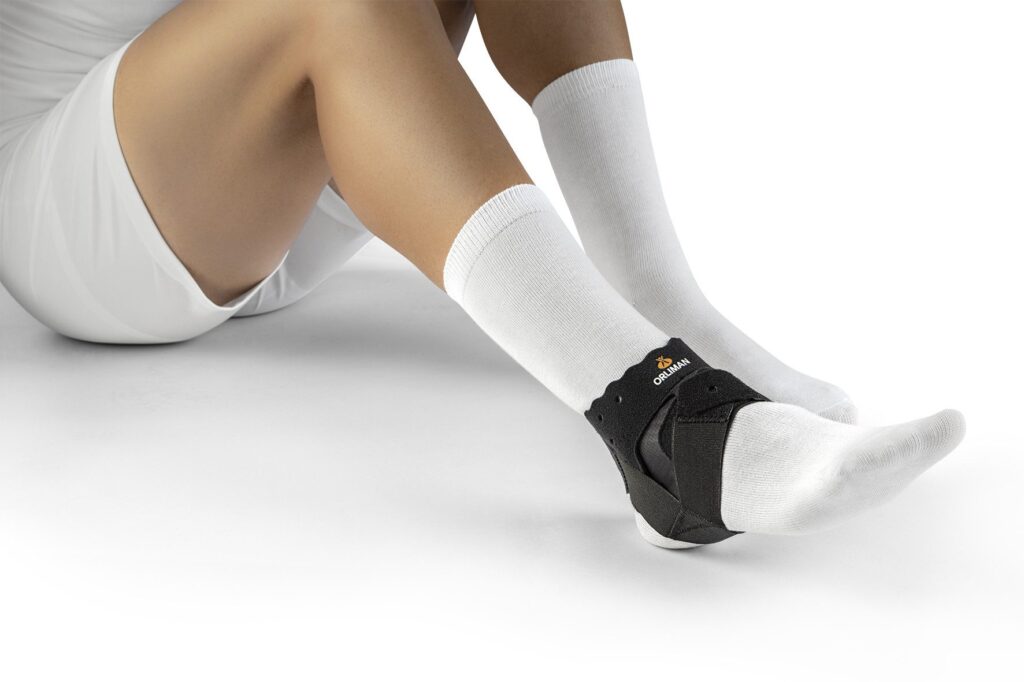
An orthosis can help stabilise a joint, restrict unwanted movement and relieve pressure on injured structures during treatment or rehabilitation. However, not all orthoses are the same. Their design and level of support should be tailored to the specific condition and the individual needs of the user. Let’s take a closer look at the different types of orthoses available on the market.
Types of Orthoses – Upper Limb Orthoses
Orthoses designed for the hand, wrist and elbow provide support during recovery from injuries and surgery, and can also help manage certain overuse conditions and joint disorders.
An elbow orthosis helps restrict unwanted movement and maintain the joint in a specific position. Some models feature adjustable flexion and extension settings, allowing the range of motion to be controlled at different stages of treatment.
Wrist supports, on the other hand, are commonly used for sprains, overuse injuries and certain other conditions. Depending on their design, they can allow some hand movement while restricting motion at the wrist joint.
For extended periods of wear, it is important to consider the material, breathability, fastening system and any areas where the orthosis may put pressure on the skin.
Types of Orthoses – Lower Limb Orthoses
Among lower limb orthoses, ankle and knee supports are among the most commonly used.
An ankle orthosis may be used following an ankle sprain to restrict unwanted movement and provide additional support during the return to everyday activities. It is important to remember that not every injury requires the same level of immobilisation or support.
Knee orthoses are available in a variety of designs to suit different needs. Depending on the model, they can provide compression, lateral support or control a specific range of motion. They are commonly used following certain injuries or surgical procedures, as well as to help manage selected chronic conditions.
The Level of Support Matters
Not every orthosis needs to be rigid.
Different orthosis designs offer varying levels of support:
- Soft and flexible – provide compression and light support;
- Semi-rigid – can restrict certain movements with the help of stays or other stabilising components;
- Rigid – offer greater control and are used when a higher degree of immobilisation is required;
- ROM-adjustable – allow the range of joint flexion and extension to be controlled.
The choice of orthosis should depend on the type of injury, the stage of treatment and the specific movements that need to be restricted. A higher level of immobilisation does not necessarily mean a better solution.
A Properly Fitted Orthosis Makes All the Difference
Even a high-quality orthosis may be uncomfortable and ineffective if it is not properly selected. An orthosis that is too loose may shift during movement, while one that is too tight can cause excessive pressure, skin irritation or numbness.
Before purchasing an orthosis, it is important to check the manufacturer’s sizing instructions. Depending on the type of product, you may need to measure the circumference of your wrist, calf, knee or ankle.
It is also worth considering the following factors:
- adjustable fastening straps;
- ease of putting on and taking off;
- material breathability;
- whether the orthosis can be worn comfortably under clothing;
- whether it is designed for everyday use or sports activities.
Can an Orthosis Replace a Cast?
For certain injuries, a doctor may recommend an orthosis as an alternative to traditional plaster immobilisation. However, this depends on the specific clinical circumstances. Patients should not replace a prescribed cast with an orthosis without first consulting their doctor.
The recommended wearing time can also vary from one person to another. Some may need to wear an orthosis for several weeks, while others may only need it during specific activities. This depends on the diagnosis and the course of treatment.
Can You Exercise While Wearing an Orthosis?
Many orthoses are designed to be worn during movement, but whether you can exercise while wearing one depends on the type of orthosis and the current condition of the affected limb. During rehabilitation, an orthosis may form part of the treatment plan, but it should not replace an appropriately tailored exercise programme.
The key principle is simple: an orthosis should be selected based on the specific condition, not just the area where pain occurs. If you have sustained an injury, undergone surgery or are experiencing persistent symptoms, it is best to consult a doctor or physiotherapist to ensure you choose the right orthosis.