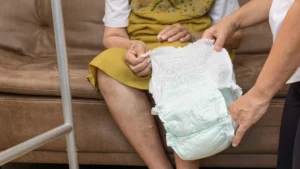

Prolonged immobility due to illness, injury or recovery can increase the risk of pressure ulcers. As these wounds can be difficult and painful to treat, prevention is essential. One of the key ways to reduce the risk of pressure ulcers is to use a suitable pressure-relief mattress combined with proper skin care.
What Are Pressure Ulcers and Who Is at Risk?
Pressure ulcers develop as a result of prolonged pressure on the tissues, most commonly around the sacrum, heels, hips, shoulder blades and back of the head. Pressure restricts blood circulation, leading to reduced oxygen supply and tissue necrosis.
Those most at risk include:
- People who are bedridden for extended periods following strokes, injuries, surgery or due to neurological conditions
- Older adults with limited mobility
- People who are underweight or experiencing malnutrition
- Patients with impaired circulation or reduced sensation
In these cases, a pressure-relief mattress becomes an essential part of home care.
Types of Pressure-Relief Mattresses – How to Choose the Right One?
The choice of mattress should depend on the patient’s condition, body weight and the amount of time spent lying down. Various types of mattresses are available, ranging from basic foam models to advanced dynamic pressure-relief systems.
1. Foam Mattresses (Static Pressure-Relief Mattresses)
They are suitable for preventing Stage I pressure ulcers in patients who retain some mobility or can change their position periodically.
- Key advantages include lightweight construction and easy cleaning
- High-resilience or contoured foam models are recommended, as they provide better pressure distribution
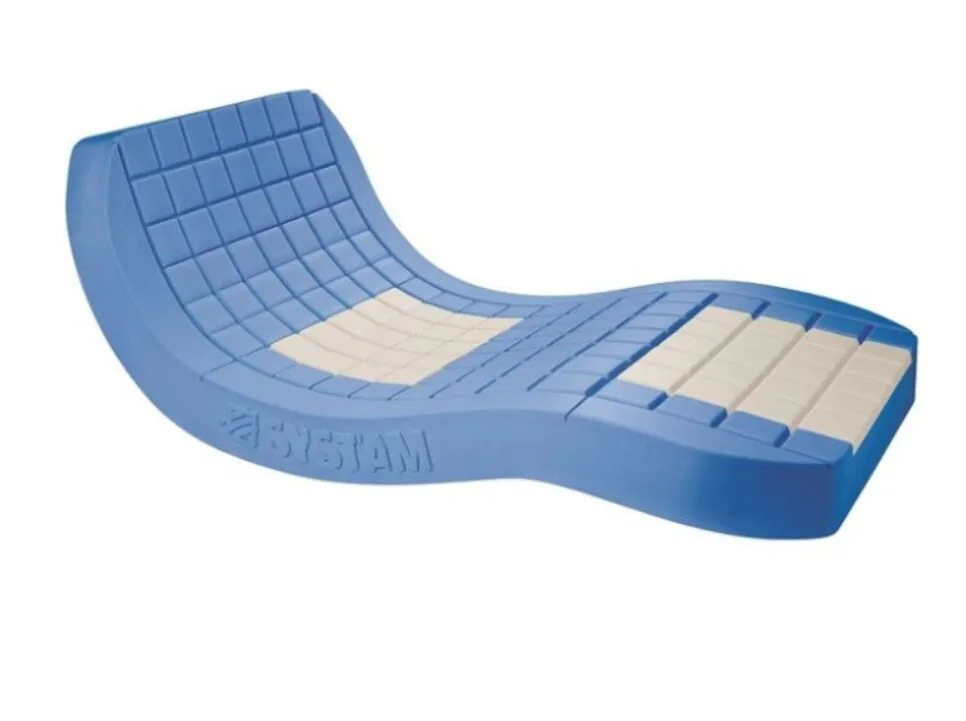
Rehabilitation and pressure relief mattress Viscoflex Evolutive
2. Tubular Mattresses (Dynamic Pressure-Relief Mattresses)
These mattresses consist of a system of air-filled tubular chambers. The included pump alternately adjusts the pressure in the chambers, relieving pressure on the body and improving circulation.
- Designed for patients with limited mobility or existing Stage I–II pressure ulcers
- Suitable for long-term use in home care
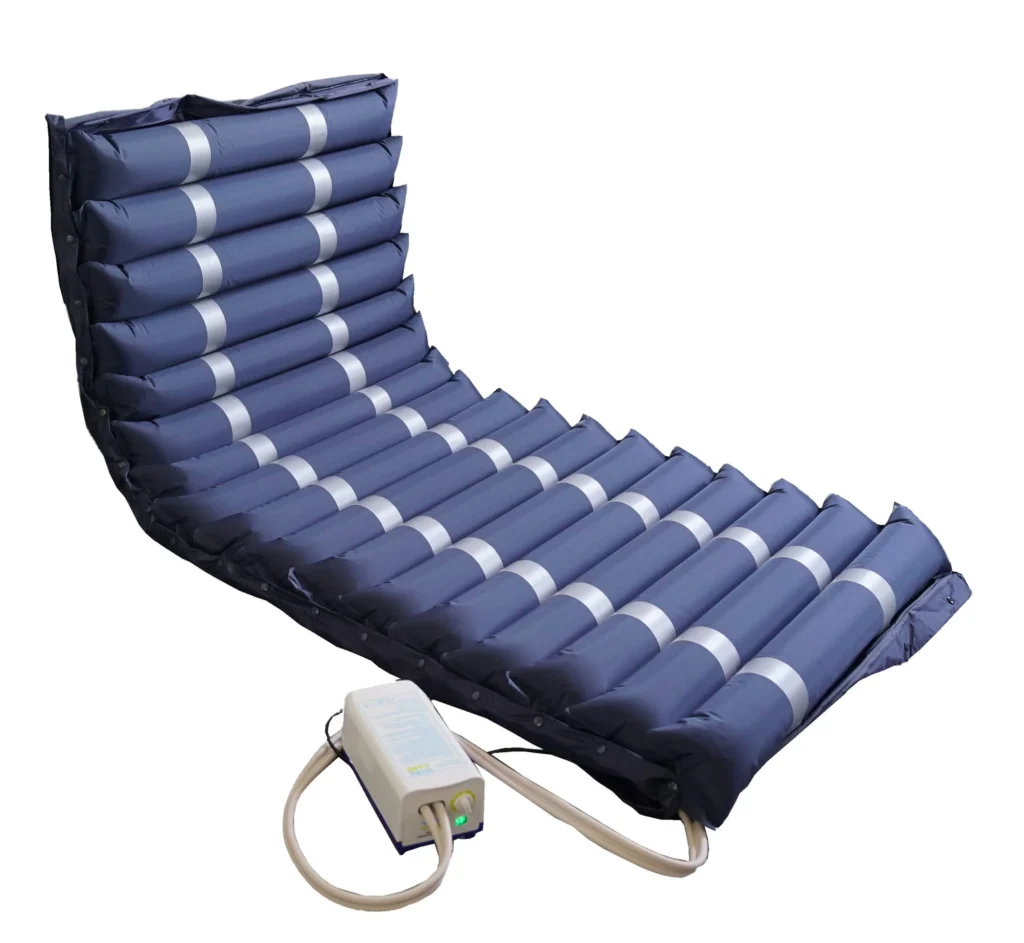
Tubular pressure relief mattress VCM 502 Vitea Care
3. Bubble Pressure-Relief Mattresses
A lighter and more affordable alternative to tubular dynamic mattresses. The bubble-shaped air cells alternately inflate and deflate to relieve pressure.
- Primarily used for pressure ulcer prevention and the management of early-stage pressure ulcers in patients requiring short-term bed rest
- Not recommended for patients weighing over 100 kg
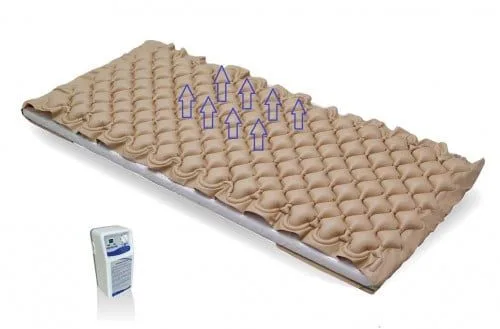
Bubble pressure relief mattress Protector I Herdegen
How to Properly Care for the Skin of a Bedridden Person?
Choosing the right mattress is only one part of pressure ulcer prevention. Regular skin care and repositioning the patient are equally important.
Daily Care Routine:
- Reposition the patient every 2–3 hours, if their condition allows.
- Check the skin daily, paying particular attention to pressure-prone areas.
- Wash and gently dry the skin using mild, alcohol-free products.
- Apply protective skincare products, such as barrier creams and lotions containing panthenol or zinc.
- Maintain good bedding hygiene – sheets should be clean, dry and free of wrinkles.
- Ensure adequate hydration and nutrition. A diet rich in protein, vitamins and zinc supports skin regeneration.
When Should You Consider Buying a Pressure-Relief Mattress?
A pressure-relief mattress should be used not only when pressure ulcers have already developed. Other indications for its use include:
- Recovery following orthopaedic or neurological surgery
- Prolonged immobility, e.g. after a pelvic fracture or stroke
- Caring for older adults with limited mobility
- Chronic conditions such as multiple sclerosis, Parkinson’s disease, ALS or spinal cord injuries
Early use of a suitable pressure-relief mattress can significantly reduce the risk of pressure ulcers and improve patient comfort.
Prevention Starts with Daily Care
Effective pressure ulcer prevention requires a combination of knowledge, consistent care and the right equipment. A suitable pressure-relief mattress helps reduce pressure on tissues, improve circulation and enhance patient comfort. Equally important are daily skin checks and gentle skincare. Regular repositioning, good hygiene and proper nutrition are essential for preventing pressure ulcers. Prevention should therefore be treated as an ongoing process and an integral part of caring for people with limited mobility.